


A Key to Many Doors: Navigating Museum Classification

Updated: Aug 6
Earlier this summer, I arrived as a foreigner coming to indulge in a Dutch summer. However, I also came as a museum intern preparing to enter a new world of professionalism. To better understand SAMA, I needed to learn about the institutions surrounding it. Anna gave me an ICOM museum card for the summer, which grants free access to museums all over the world.
However, as I quickly learned, not every museum applied to this.
On my museum journey, I had to ask myself a vital question: how was I supposed to maximise my time if I didn’t even know which museums I had access to? There are differences between museums recognized by ICOM and museums that weren’t. I decided that one of the best ways to understand was trial by fire: visit museums and test if my card would work as a key to their houses of knowledge.

I toured various museums with my ICOM card over the summer, but I finally decided to research what regulations distinguished cultural institutions from one another in the Netherlands. From what I’ve come to understand, there are three large sources an organization can be recognized by: International Council of Museums (ICOM), International Council of Museums Nederland (ICOM Netherlands), and Museumvereniging. ICOM applies all across the world, Museumvereniging applies exclusively to select institutions in the Netherlands, while ICOM Nederland bridges the two by applying the international regulations to the Netherlands specifically.
ICOM has been the largest international organization in the museum field since its conception in 1946. It operates globally across 118 countries and defines a 'museum' as follows:
"... a not-for-profit, permanent institution in the service of society that researches, collects, conserves, interprets and exhibits tangible and intangible heritage. [A museum is] Open to the public, accessible and inclusive, museums foster diversity and sustainability. They operate and communicate ethically, professionally and with the participation of communities, offering varied experiences for education, enjoyment, reflection and knowledge sharing.”
ICOM grants membership to individual professionals as well as the institutions, allowing access to membership on a personal or organisational level.
ICOM Nederland endorses this exact definition, while making efforts to apply it to institutions exclusively located in the Netherlands. The definition serves as the basis for the Museum Register, a quality mark for museums. ICOM Nederland serves as a bridge between the ideologies of ICOM with the Netherlands specifically. It is the national branch that allows access to the international network while focusing on local administration and Dutch subsidies.
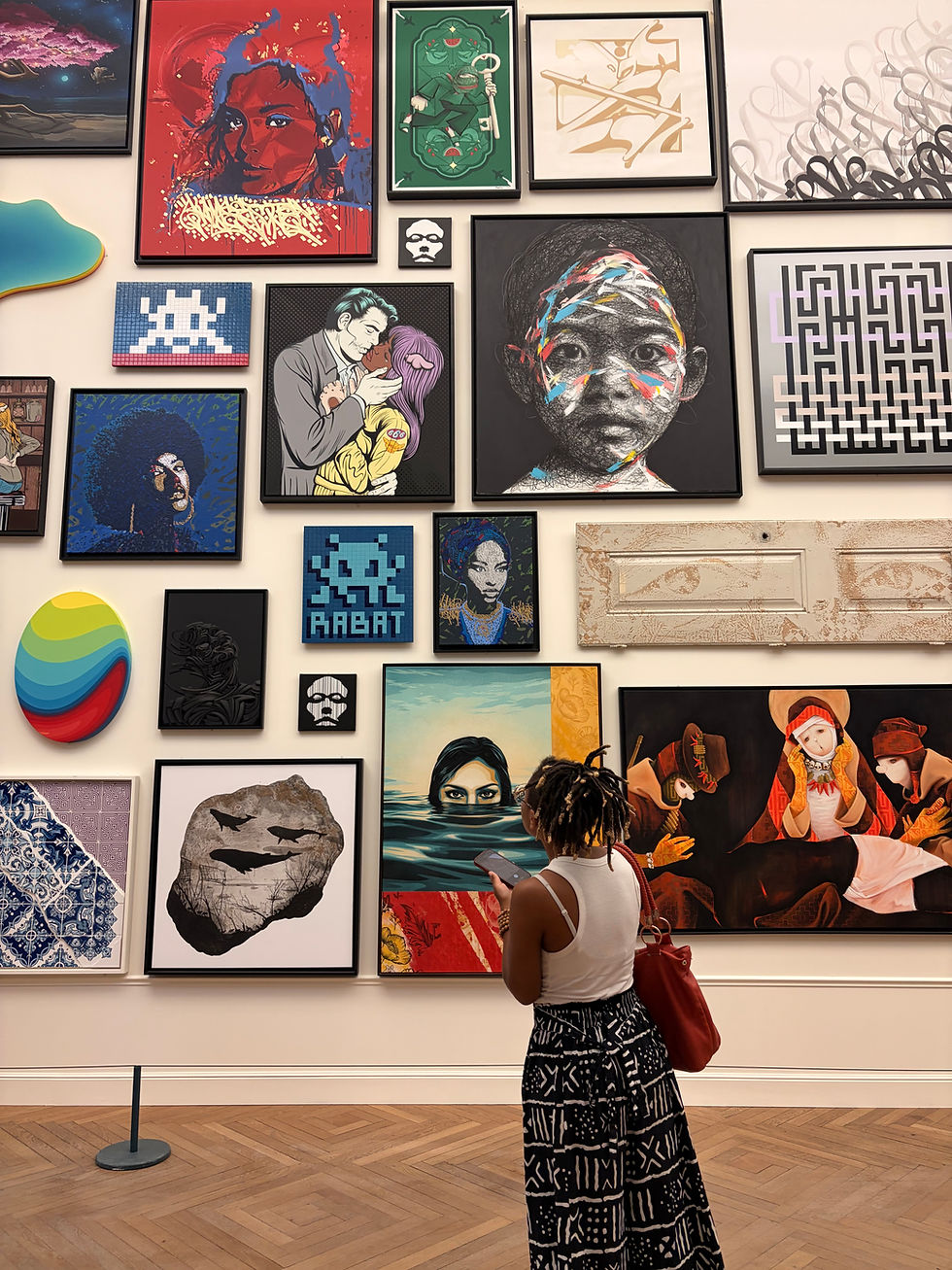
Museumvereniging resonates with the essential parts of ICOM's definition, but applies exclusively to the Netherlands and Dutch networking resources. Another significant difference is that only the institutions can hold formal membership, as represented through their management team.
One vital element of every museum (regardless of what standards it's recognized by) is a permanent collection. So, how does a collection get recognized? As I've learned, this occurs through a process called “accessioning”. Once a museum decides to become a museum, it must do so through a legal process of documentation and certification of an object into the budding collection.

So, where does SAMA factor into these formal definitions of what it means to be a 'museum' with a 'collection'?
SAMA is an institution that explores cultural heritage and the way in which street art creates space for communities to share stories. Its collection is intentionally centred on a defined area of Amsterdam Nieuw-West, with only a limited number of works located elsewhere in Amsterdam. More than a collection of artworks, it also preserves the stories, memories and community knowledge connected to them.
The newer understanding of heritage comes from younger people practicing a vital skill: questioning. As a young woman and scholar myself, I have come to realise the abundance of the resources we have to find answers. We are in an era where knowledge is easier to access than ever before, but the development of heritage now starts with knowing HOW to access and interact with that information.

In my time here in the Netherlands, I have been reminded of a vital lesson: looks can be deceiving. Although SAMA may not appear to be a "traditional" museum, it is officially recognised as one by ICOM and accomplishes something all three of these definitions have in common: functioning for the people. It documents the stories of the people who helped to create while directly involving people with the creation of even more art. The collection is not exclusively a physical thing; it comes to life through the stories of every piece - intangible heritage.
Museums are not just educational; I have come to understand that they are essential to our wellbeing as communities.
-Alissandra Cummins, GCM, FMA, ICOM Honorary Member, former Editor-in-Chief, International Journal of Intangible Heritage (Barbados), "Museums and intangible cultural heritage: a memoir and a meditation"
Works Consulted: ICOM Nederland. “Home.” Accessed July 31, 2026. https://icom.nl/nl.
International Council of Museums. “International Council of Museums - The Global Museum Network.” Accessed July 31, 2026. https://icom.museum/en/.
Museumvereniging. “Home.” Accessed July 31, 2026. https://museumvereniging.nl/.
“Platform Faro.” Accessed July 31, 2026. https://faro.cultureelerfgoed.nl/articles/9351.
"International Journal of Intangible Heritage", Volume 21, ISSN: 1975-3586E-ISSN: 1975-4019. https://www.ijih.org/volumes/21/ENG


