The Magical Mister Changa

Updated: Aug 6
Anna had returned from a trip to Valencia, feeling inspired and energetic as ever. As she recounted her travels, she told me about an artist who had particularly inspired her: Mister Changa. After showing me souvenirs from the trip, including two limited edition booklets about some of Mister Changa's work, I decided to try and share what I've learned.
Every March, Valencia burns hundreds of artworks. For many visitors, the Fallas festival is a spectacle of fire. Monumental sculptures fill the city's streets for only a few days before they are ceremonially consumed by flames on La Cremà. It can feel almost contradictory: months of artistic labor ending in a single night. Yet this annual act of destruction raises an intriguing question. If these artworks disappear so completely, why do they continue to shape Valencia's artistic identity decades later?
The career of artist Victor Valero, or Mister Changa, offers one possible answer.

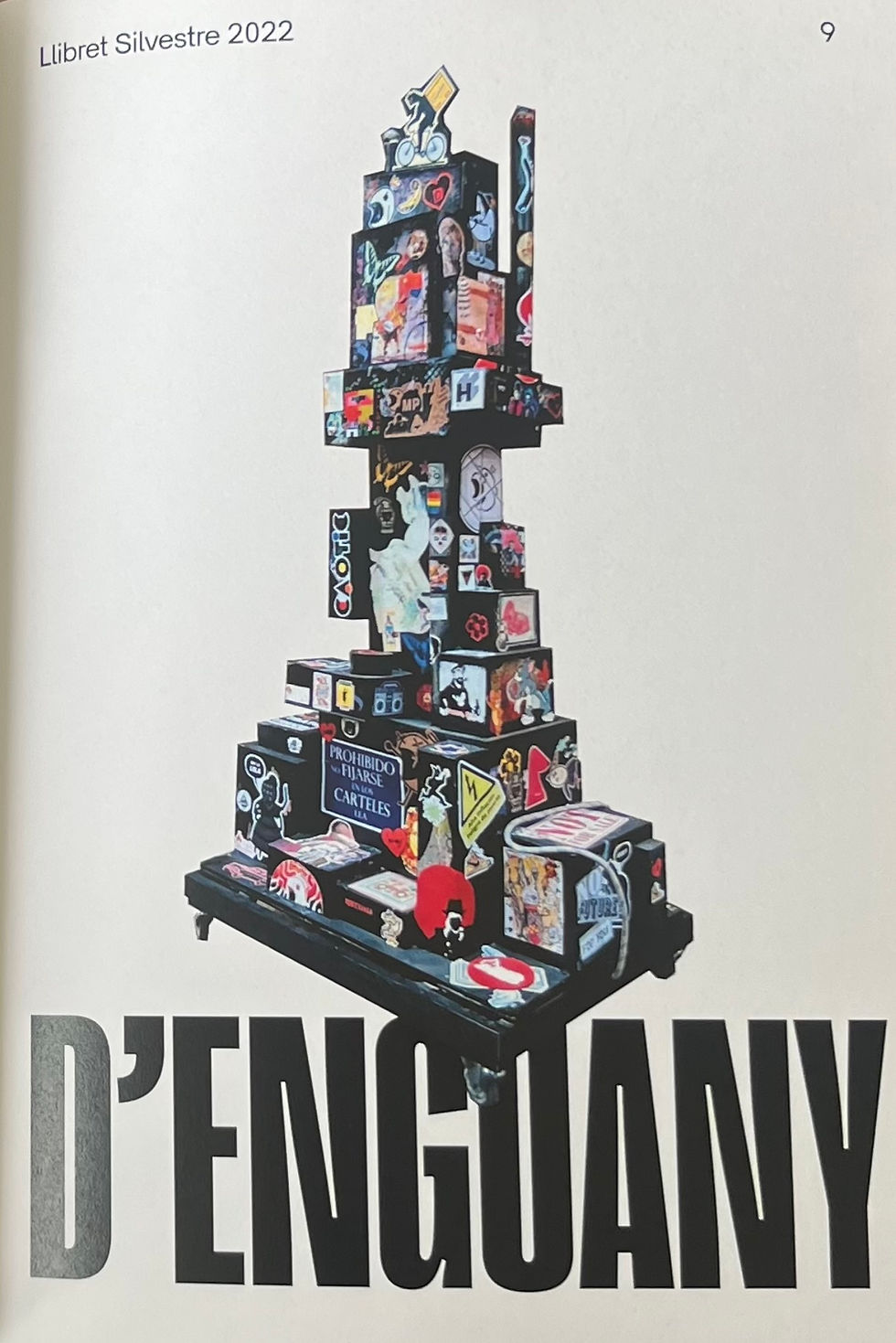
Me Colé En Una Fiesta
40 Anys D'açó
FALLA ALTO-SANTO TOMÁS
1983-2023
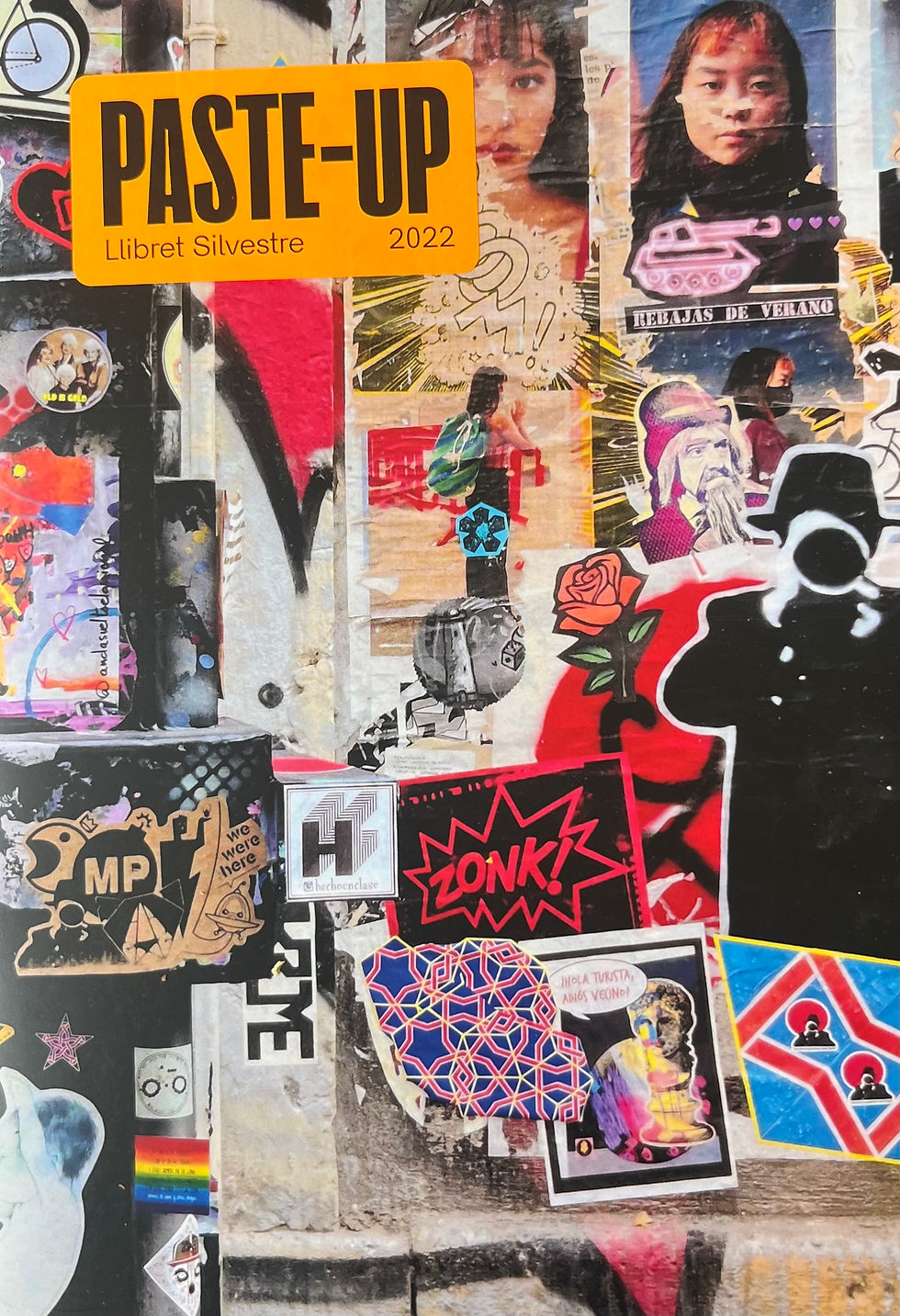
PASTE-UP
Llibret Silvestre
2022
At first glance, Mister Changa’s trajectory seems familiar. Emerging from the world of Fallas before becoming an important figure in Valencia's contemporary public art scene, his work appears to represent a transition between two artistic traditions. His career illustrates a paradox that extends far beyond Valencia:
Art can be physically temporary while remaining culturally permanent.
This distinction challenges one of the oldest assumptions traditional museums have inherited: that an artwork's value is tied to its physical survival.
Traditionally, museums have privileged material permanence. Oil paintings are conserved. Bronze sculptures are restored. Historic buildings are protected because their continued existence allows future generations to encounter them directly. Preservation has often meant protecting the object itself. However, street art complicates this idea. Murals are painted over. Wheat-pasted posters peel away. Graffiti is buffed. Entire walls disappear beneath redevelopment projects. The medium has always existed with the understanding that permanence is uncertain.
Some of the most influential public artworks of the last half-century have existed only briefly. Keith Haring's subway drawings were erased almost as quickly as they appeared. Blu famously painted over many of his own murals in Bologna, transforming their disappearance into an artistic statement in itself. Even Banksy's work often vanishes within days: removed, destroyed, or sold. Yet their influence has never depended on how long the physical works remained intact.

Instead, they changed how artists thought about public space. They expanded visual vocabularies. They inspired new generations of creators. The artwork disappeared, but its language remained. Fallas make this relationship between art and impermanence even more explicit. Unlike street artists, who often accept that their work might disappear, Fallas artists know with certainty that it will. Destruction is not an unfortunate possibility: it is the planned conclusion of the artwork itself. Every viewer understands from the beginning that these monuments are temporary. Their burning is not the loss of the artwork, but its completion. Seen this way, Fallas become one of the clearest examples anywhere in the world of an artistic tradition where disappearance is inseparable from meaning.
This is precisely what makes Valero's legacy so fascinating. The recent collection of essays examining his work repeatedly returns to the same observation. His early Fallas no longer exist. The experimental fanzines associated with his artistic circle were cheaply photocopied and rarely preserved. Posters have disappeared. Installations have been dismantled. Exhibitions have ended. The objects are gone.
Yet forty years later, artists, historians, and critics continue discussing them.
Even more significantly, they argue that the ideas introduced in those works never vanished. Jose Francisco Carsí observes that many of the visual strategies present in Valero's earliest monuments continued throughout his later career. Vicent Borrego notes that younger generations of artists still work within visual languages first explored during that period. Rather than mourning what has been lost, these authors point toward what has endured.

Material permanence is only one way an artwork can continue existing. Documentary permanence offers another. Photographs, books, archives, and catalogues allow works to persist through documentation long after the originals have vanished. Publications such as the volume on Valero become acts of preservation in their own right, ensuring that future readers can continue engaging with works they will never physically encounter. But there is a third kind of permanence that may be even more significant. Cultural permanence.
This is the moment when an artwork changes how people think. It reshapes artistic expectations. It introduces new visual possibilities. It alters the identity of a neighbourhood, a city, or an artistic community. Nothing material may survive, yet the work continues through those it has influenced.
That seems to be what happened with Mister Changa. His monuments burned. His posters faded. His installations ended. Yet his artistic language continued to circulate through other artists, other projects, and other public spaces. The artwork became less an object than a lineage. For institutions dedicated to public art, this distinction feels particularly meaningful.

Traditional museums often preserve objects. Street art museums, by necessity, frequently preserve something less tangible. We document stories. We collect photographs, interviews, sketches, memories, and community histories. We preserve context as much as we preserve images. Sometimes what matters most isn't saving the wall itself, but understanding why that wall mattered: and how its ideas continue to live elsewhere.
The irony is striking. Fallas preserve almost nothing physically, yet their cultural influence is immense. Street art often disappears, yet continues to shape cities long after individual works are gone. Perhaps permanence has never been about longevity alone.
Reading the essays on Valero, what emerges most clearly is not nostalgia. The authors are not asking us to mourn artworks that no longer exist. Instead, they invite us to recognize their continued presence in contemporary Valencia. Their argument is one of transmission rather than remembrance. The past matters not because it is gone, but because it continues to shape the present.
For those of us working with street art, this may be one of the most important lessons we can take from Fallas. Our role is not simply to preserve walls, monuments, or objects against the inevitability of change. It is to preserve creative lineages: to trace how visual ideas travel from one generation to the next, from one medium to another, from temporary interventions to lasting cultural influence. The flames of La Cremà may consume the monument. But they cannot burn away the imagination it leaves behind.