


Beyond Preservation: What Happens When Street Art Enters Institutional Value Chains?
- Anna Stolyarova

- Jun 7
- 6 min read
Last week, I finally had time to sit down with a fresh copy of Exposer le street art by Eric van Essche (CFC-Éditions), a publication to which I had the pleasure of contributing. Almost simultaneously, while the Dutch immersive and cultural innovation world temporarily migrated to London, I unexpectedly found myself catching up with an old acquaintance — Lee Bofkin of Global Street Art. Our conversation drifted from archives to public space, from digitisation to collections, and eventually to a deceptively simple question: what are we actually trying to preserve? Then another piece of news appeared. Dutch Graffiti Library announced the theft of one of their most precious collection items during an exhibition at STRAAT.
Three completely different moments:
A book.
A conversation.
A loss.

And yet all three seemed to orbit around the same set of questions:
What happens when street art moves from community custody into institutional value chains?
What changes when archives become exhibitions and cultural memory becomes visitor experience?
And if preservation itself is not always the highest form of remembering, then what exactly are we trying to save?
Today, while preparing a presentation for ErfgoedAcademie for next week on participatory approaches to heritage and valuation, taking as a staring point the Value-Guideline we developed for RCE, I realised these thoughts had quietly been accumulating for some time. So I allowed myself to write them down.
“The role of institutions is not only to preserve culture — but to create environments where knowledge can circulate.” — Anna Stolyarova, founder, Street Art Museum Amsterdam
Street art spent decades fighting for recognition. Communities, artists, photographers, local archives and independent initiatives documented, collected and safeguarded works long before institutions considered them worthy of preservation. Recognition felt necessary, even urgent. And yet, as street art enters museums, archives and visitor economies, a different question begins to emerge: What if preservation itself is not the highest form of remembering? This question becomes increasingly relevant as urban culture moves from community custody into institutional value chains — acquiring visibility, legitimacy, economic value and professional care. But perhaps also changing in the process.
I. Street — the act
“The street is the river of life of the city.”— William H. Whyte
Street art was never only an object. It was an encounter. An interruption. A social act unfolding in public space. Graffiti and street art emerged outside formal systems of validation and often positioned themselves against dominant visual economies — including advertising, ownership and institutional control. Meaning did not sit only in permanence. Meaning lived in timing. Context. Presence.
As Exit Through the Gift Shop playfully reminded us, street culture becomes most difficult to define precisely when it starts becoming collectible.

Street art did not ask permission to become heritage. It became heritage because people cared. At SAMA, this understanding emerged not through theory but through practice. Projects such as Community Living Lab and the Neighbourhood Garden of Stories repeatedly showed that residents rarely distinguish between art, participation and everyday life. Murals became reasons to gather. Gardening became a method for storytelling. Public space became a classroom. The value did not sit only in the final result. It emerged through relationships.
II. Archive — memory
“To archive is to produce as much as to record the event.”— Jacques Derrida
Archives appear to solve this problem. Photographs, collections, catalogues and digital reconstructions promise continuity beyond disappearance. At SAMA we deeply believe in this work. Projects such as the Digital Street Art Depot emerge from a simple understanding: disappearance does not make culture less valuable. But archives are not neutral.

The moment we document, select and organise, we begin shaping what deserves to be remembered, and how. Archives preserve traces. Not life itself. Working with disappearing murals and lost works made us realise that documentation is never neutral reconstruction. Digital archives preserve fragments: images, stories, metadata, memories, processes. They do not replace the original encounter. But they extend its social life and create opportunities for future interpretation, education and participation. Perhaps this is not a limitation. Perhaps this is their strength.
III. Institution — stewardship
“Brands are a force that shape our public spaces and I’d rather it sucked less.”— Lee Bofkin
Museums introduce another promise. Not permanence. Stewardship. Collections become exhibitions. Public culture becomes visitor experience. Institutional care brings enormous value: conservation, research, visibility, resources, access.But institutionalisation also transforms relationships. Questions appear:
Who owns the archive?
Who benefits from visibility?
Who carries responsibility?
How does public culture change once value becomes measurable?

Street art historically challenged dominant visual systems. Today, perhaps the challenge is not whether street art should enter institutions. Perhaps the challenge is: How do institutions avoid reproducing the very logic that street art originally resisted? Professionalisation is not demonstrated through architecture, scale or ticket sales. It becomes visible through care.
For SAMA, this raises a practical challenge. As collections, archives and public expectations grow, care can no longer depend only on informal labour and individual commitment. Professionalisation becomes less about prestige and more about building long-term capacity: governance, ethical frameworks, documentation standards, digital infrastructure, knowledge transfer and stewardship models capable of carrying responsibility over decades rather than project cycles.
IV. Monument — enduring memory
“Monuments are not built to remember the past but to shape the future.”— James E. Young
Anthropologist Rafael Schacter proposes another possibility.
What if the value of graffiti does not lie in survival as an object?
What if its monumentality emerges precisely through its temporary, social and embodied nature?
Not monument as stone.
Monument as action.
Monument as memory.
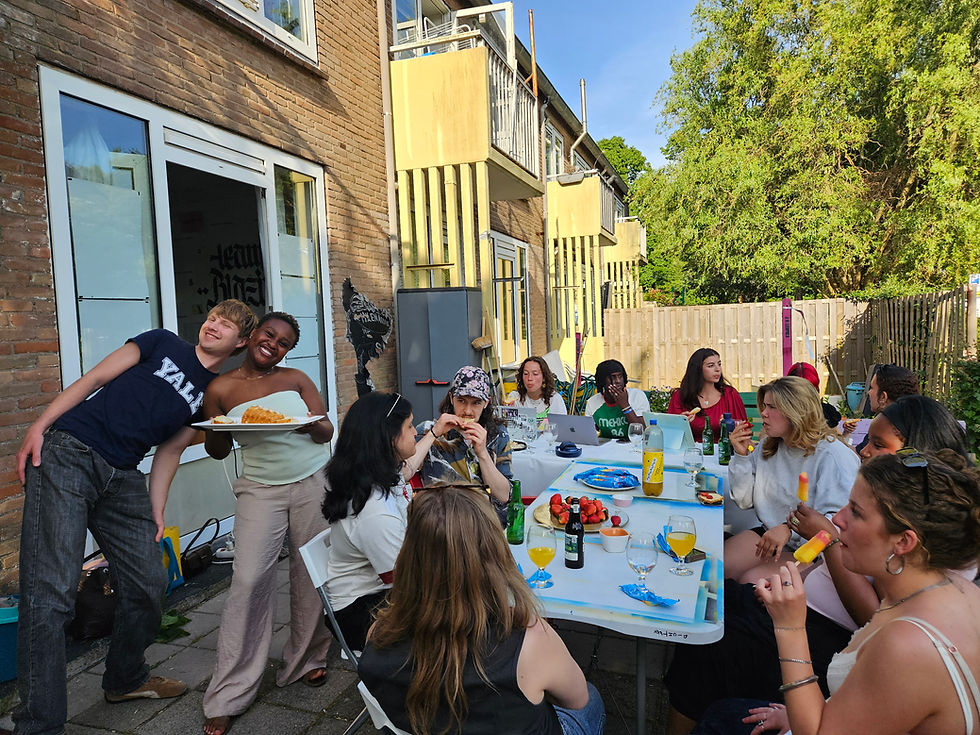
Perhaps preserving street art does not always mean freezing walls, collecting fragments or reproducing surfaces. Perhaps preservation can also mean maintaining relationships, stories, methods, archives and conditions that allow future acts of meaning-making to happen.
Recent discussions at KEMS reinforced this observation. Participants repeatedly questioned whether impact can be captured through immediate outputs and whether institutions leave enough time for meaningful change to emerge. This perspective suggests that heritage may operate similarly: not as fixed preservation, but as the accumulation of relationships, interpretations and future acts of remembering. This does not make institutions irrelevant. It makes their role more demanding. Because once street art enters institutional value chains, institutions inherit not only objects, but responsibility for the social worlds attached to them.
V. Co-Learning — preserving the capacity to remember together
If preservation alone is not the highest form of remembering, perhaps the future of heritage lies somewhere else. Not in freezing objects. Not in endlessly reproducing surfaces. But in creating the conditions through which societies continue learning.
Over the past half-year conversations across SIA, SURF Future Days, CIIIC and KEMS repeatedly returned to similar questions:
How do we create systems that learn?
How do we recognise citizens as producers of knowledge?
How do we allow impact to mature beyond project timelines?
How do we preserve not only objects, but relationships, practices and future possibilities?
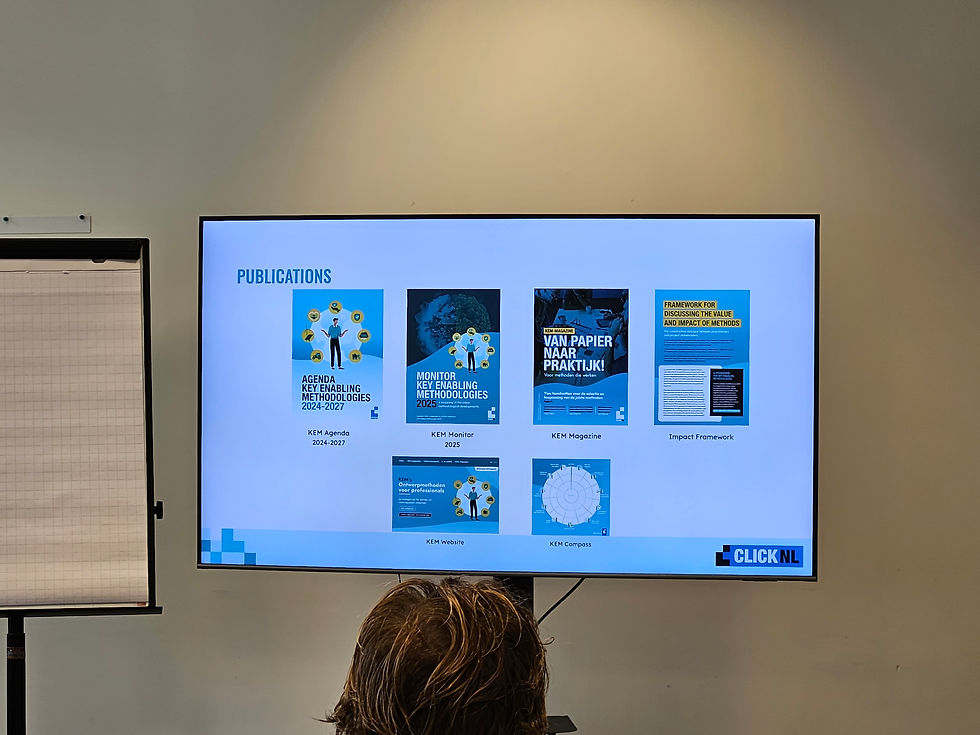
At SAMA, these questions increasingly lead us toward what we describe as an: Innovative Co-Learning Methodology — community-based citizen science for urban heritage. This approach starts from a simple but often overlooked assumption: citizens do not merely participate in knowledge production, they already produce knowledge. Communities learn from SAMA and academic partners through artistic practice, heritage methods and new forms of reflection. At the same time, SAMA and academia learn from communities through lived experience, local knowledge and long-term presence. This process requires time. It requires trust. It requires maturity. Knowledge is not extracted from communities and translated elsewhere. It is generated collectively. The role of institutions is not only to preserve culture, but to create environments where knowledge can circulate. This shift requires time. Perhaps decades.
Professionalisation therefore becomes not an end in itself, but an investment in staying long enough to observe change, document failure, share methods and build trust across sectors. Perhaps the future of street art heritage is not collection. Not spectacle. Not monument. But civic infrastructure. A living system where communities, artists, researchers and institutions continuously observe, document, experiment and care together. Because impact is not delivered. Impact is learned.


