


Hello, my name is ... Linh!

Where are you from?
I’m originally from Hanoi, Vietnam, and I’m currently studying and working freelance in Montreal, Canada as a visual artist and graphic designer.
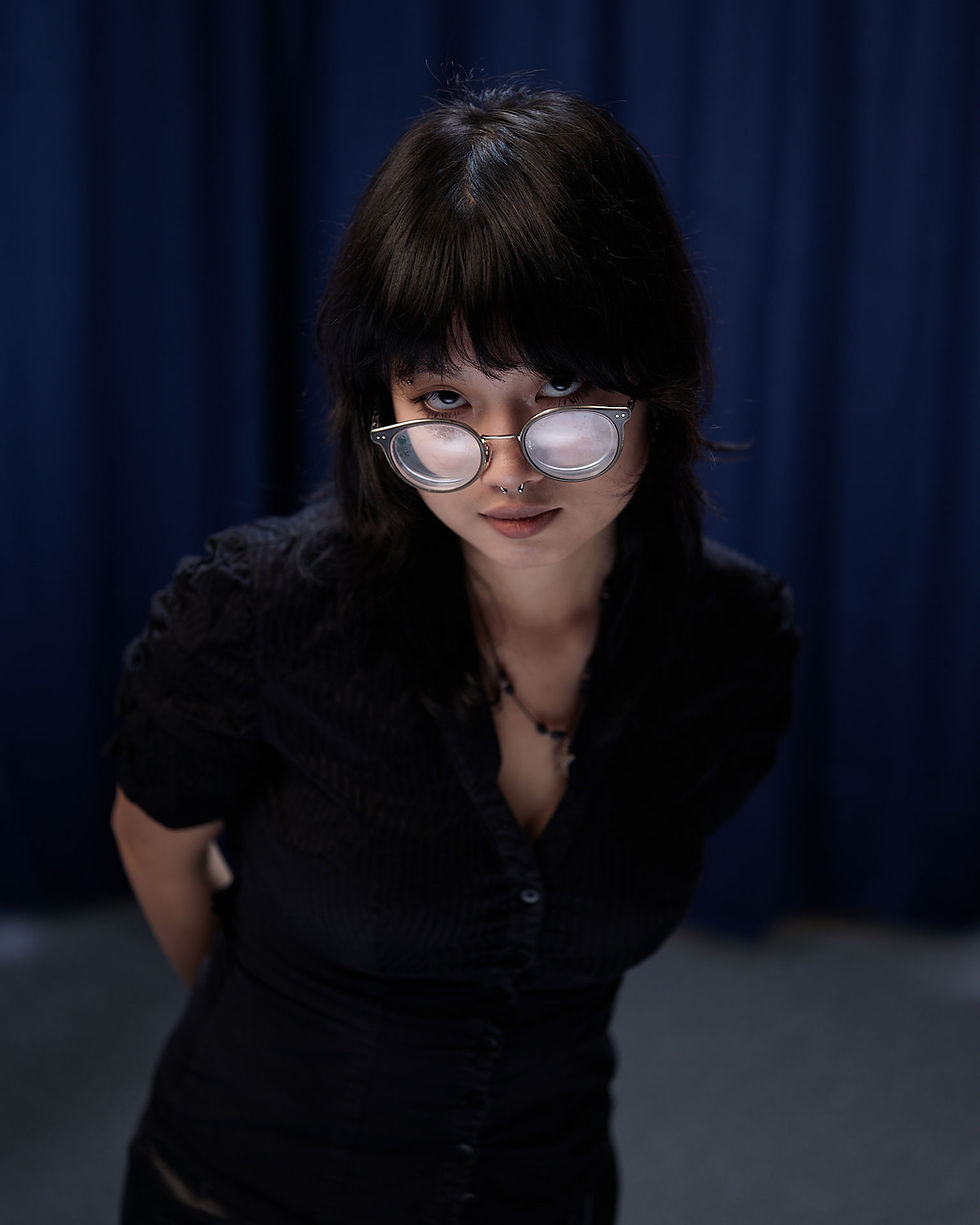
My 3.5 years in Montreal have deeply shaped me — not only as a designer and artist, but also as a person. It’s a beautiful city full of beautiful people. I’ve met so many inspiring people and built meaningful relationships, which I find the most precious. Being far away from home pushed me out of my comfort zone and encouraged me to put myself out into the world. That experience gave me many opportunities to learn, meet new people, and grow. One important lesson I’ve learned in Montreal is to keep seeking new experiences and challenges, because there is always something to learn from them, even when things don’t go as planned.
That’s also why my internship at Street Art Museum Amsterdam became such an important part of my journey. It was my first remote work experience, and it allowed me to collaborate with a unique organization whose values and interests resonate strongly with my own.
Can you tell me something about the place where you come from?
My hometown, Hanoi, is a place where you can still see the layers of history alongside rapid industrialization and urban development. There’s a strong contrast between historical landmarks, centuries-old architecture, and the growing presence of skyscrapers, modern housing, and new infrastructure.
What I love most, though, is the people — people who carry the weight of history yet remain resilient, warm, and generous in rapidly changing times. There’s a deep sense of kindness in everyday life that I always carry with me, no matter where I go.
At the same time, Hanoi is also facing increasing gentrification, something that feels more and more universal in cities around the world today, including Amsterdam. That’s partly why I was so excited to participate in SAMA’s projects, which use art and design to encourage community engagement and create conversations between residents and housing corporations.
To me, this approach feels much more inclusive and democratic than the kinds of urban transformation projects where local residents are excluded from decisions about their own neighborhoods. Learning from SAMA inspired me to think about how similar practices could be brought to my hometown — not only to foster stronger connections between residents, but also to raise awareness about the families and communities affected by gentrification.
What do you like to do in your free time?
I love spending time with friends, listening to what’s happening in their lives, and supporting them however I can. Community is one of the most important things to me, and I want to be someone people can rely on.
I’m also deeply curious about the world and constantly drawn toward learning — especially about human relationships, history, art, and cinema. In my free time, you’ll usually find me reading a history book or scrolling through my endlessly long movie watchlist trying to decide what to watch next.
At the same time, I feel a strong need to express myself creatively through drawing, graphic design, and animation. All of these interests naturally draw me toward spaces and institutions that value creativity, collaboration, and community engagement — places where I can find meaning in the work I create.
What is your relationship to street art? And to art in general?
I grew up in a city without a very strong street art tradition, so for a long time I saw street art as something distant and mostly associated with Western cities. I didn’t fully understand how deeply it could shape urban spaces and public life.
As I became more socially and politically aware, I started learning about the history and social impact of street art, which completely changed the way I see murals and graffiti in everyday spaces. I began to understand them as living expressions of people — messages directed toward the city itself. I love the unexpectedness of encountering a piece of art in daily life and how public art creates a dialogue between people and their surroundings.
I’ve loved art for as long as I can remember, and I see myself as an artist who wants to explore the complexities of human expression. That’s why street art fascinates me so much: it is inherently social, and that social quality feels deeply connected to what it means to be human.
What is the most interesting aspect of street art to you?
What interests me most about street art are its subcultural roots and its ability to transform urban spaces into something that is not only aesthetically engaging, but also socially meaningful.
I really admire artists like Banksy, who understand the unique power of street art — how placing an artwork directly in public space allows it to communicate immediately with the people living around it.
Street art has a powerful relationship with public consciousness because it exists openly within everyday life: on streets, walls, and in neighborhoods people move through every day. Of course aesthetic value matters, but for me, street art becomes most meaningful when it strengthens community bonds, raises social awareness, and encourages people to reflect on the realities around them.
What are your responsibilities at SAMA?
In collaboration with my fellow intern, I helped develop the visual identity for construction banners for new buildings in the Dichtersbuurt neighborhood. I also designed stickers for the project STAR 2.0 – Street Art for The Future, while contributing to smaller visual design tasks such as video editing, icon illustrations, and graphic elements for publications.
A really valuable part of the process was how closely connected the work was to the local residents. Through Anna, we received guidance, feedback, and insights from the community throughout the design process. Even though the internship was fully remote, I still found the experience incredibly meaningful because it allowed me to understand how different people respond to and interact with visual design in public spaces.
What I appreciated most was that the work was not only about creating something aesthetically pleasing, but also about designing with the community in mind. Receiving direct feedback from the people who would actually experience these visuals made the process feel much more thoughtful and collaborative.

Do you have a favourite artist in the collection?
Because I worked remotely at SAMA, I spent some time exploring artworks through Digital Street Art Depot. One of my favorite artists from the collection is the Dutch collective Team Blazin.
As a digital designer, I’m intrigued by their bold yet highly refined lettering style. Their work Future really stood out to me because of the way it captures the rebellious energy and raw attitude of street art, while still feeling incredibly controlled and skillfully composed. The bold colors and expressive strokes feel dynamic and alive, yet every element complements and intertwines with one another in a very thoughtful way. What I admire most about Team Blazin is their ability to transform words into artworks that feel full of movement and energy. Their pieces go beyond typography — they create an emotional and visual experience through lettering itself, which I find deeply inspiring as a designer.
What interests you most about SAMA’s concept?
What interests me most about SAMA is its unique approach to visual art and community engagement. What I find especially valuable is the close contact between the artworks and the local residents, who are not just spectators, but active participants in the art experience.
At SAMA, artworks are treated not simply as finished objects, but as conversations — living processes that evolve within the community. There is not only the visual experience itself, but also ongoing interaction, dialogue, and collaboration between artists, residents, and the surrounding environment.
Through this approach, the neighborhood becomes more than just a location for public art. It becomes a space where artists and residents can connect with their environment and, at the same time, strengthen connections with one another. That sense of community engagement and collective participation is what I find most meaningful and inspiring about SAMA’s work.
Which artwork do you appreciate the most?
One of the works that stayed with me the most is Migration (2015) by the Iranian street artist Nafir.

What strikes me about this piece is the way it brings immediate attention to the often overlooked realities of migration. The image of a family struggling to hold onto one another as they try to reach the borders of the EU is simple, yet incredibly powerful. It’s the kind of artwork that immediately hits you emotionally.
The piece resonates deeply with me because I can relate to the realities of a world where families are forced to leave their homes in search of safety, stability, and a dignified life. In a time increasingly shaped by political conflict and displacement, this is a story we continue to witness across the world. It speaks not only about movement across borders, but also about inequality — about who gets to stay, who gets to live in peace, and who is forced into uncertainty. To me, the artwork captures themes of struggle, displacement, and resistance in a very honest and human way.
What has been the most challenging moment at SAMA?
One of the most challenging moments during my time at SAMA happened during the briefing process, when there was some miscommunication between the interns and Anna that led to design outcomes that did not fully meet expectations.
Working remotely taught me that collaboration can feel fragmented when people are physically disconnected from one another. Small misunderstandings in communication, timing, or expectations can easily grow during the design process. Looking back, I also realized that part of the issue came from our side, as we could have taken more initiative to clarify certain details before starting the work.
Even though it was challenging at the time, I see it as a very valuable learning experience. It taught me the importance of communication, asking questions early, and maintaining clarity throughout a collaborative process — especially in remote working environments. I’m grateful to have learned these lessons through working with Anna at SAMA.
What has been the most favourite moment at SAMA?
My favourite moment at SAMA was receiving positive feedback from Anna and the local residents. Maybe I’m a little bit of a validation seeker (oops…) but genuinely, knowing that the work I created could bring excitement and satisfaction to the people who actually live in and experience the neighborhood meant a lot to me.
What motivated me most throughout the internship was the idea that design could have a direct impact on people’s everyday environment and experiences. So hearing that the residents and the team appreciated my work was incredibly rewarding and encouraging. It made me feel that the work we were creating had a real connection to the community.


